

Kambo: A Ceremonial Practice of Cleansing, Release and Renewal.
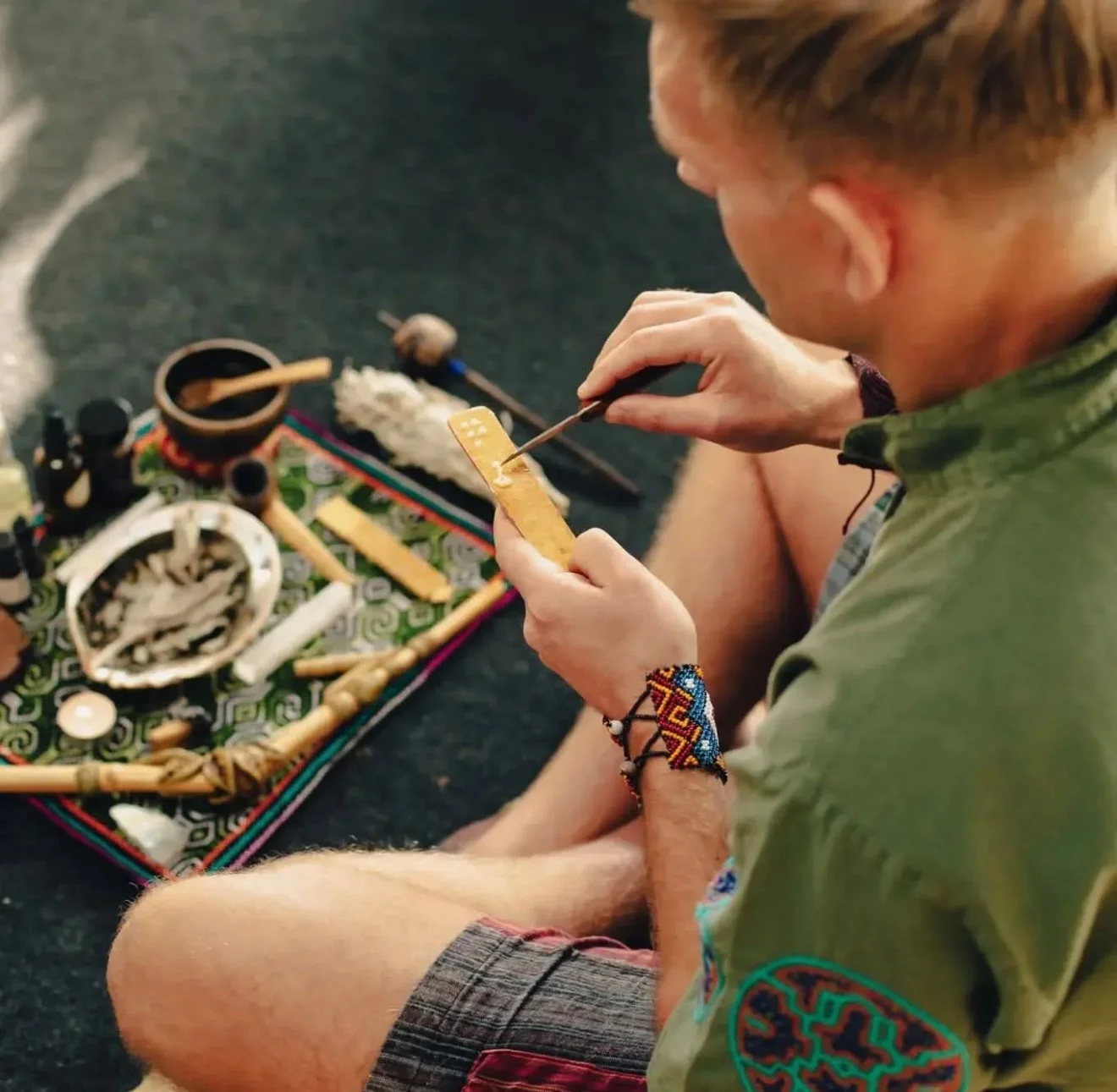
Kambo Ceremony by @kambovital
In recent years, Kambo has become more widely known within holistic and ceremonial wellness spaces. Rooted in ancient Amazonian tradition, Kambo is not a trend or a quick fix, but a deeply respected practice that invites release, clarity, and reconnection to the body when held with care and integrity.
This article offers an introduction to what Kambo is, where it comes from, how it is traditionally used, and why many people feel drawn to work with it as part of a wider healing journey.
What Is Kambo?
Kambo is a traditional ceremonial practice originating from Indigenous tribes of the Amazon rainforest. It involves the application of secretion from the Phyllomedusa bicolor frog, often referred to as the giant leaf frog.
Used for generations by tribes such as the Matsés, Katukina and Yawanawá, Kambo has traditionally been applied as a ritual of cleansing, strength and preparation. Hunters would work with Kambo before journeys to sharpen awareness, clear stagnation and build resilience.
Today, Kambo is approached ceremonially and respectfully in non-Indigenous contexts, with emphasis on consent, preparation, safety screening and integration.
Importantly, Kambo is not psychedelic. It does not alter perception or induce visions. Instead, it works through bioactive peptides that interact with the body, often producing a short but intense physical response followed by a sense of release or reset.
Origins and Indigenous Wisdom
In the Amazon, Kambo has long been viewed as a tool for clearing “panema” — a state of heaviness, stagnation or bad luck believed to affect the body, mind and spirit.
For Indigenous communities, Kambo is not separated into physical or spiritual categories. It is understood as a holistic practice that supports balance, clarity, and readiness for life’s challenges.
This ancestral context is important. Kambo is not something to be extracted, diluted or commodified. When offered outside the rainforest, it must be held with humility, respect for its origins, and an understanding that ceremony is as important as the substance itself.
Why People Are Drawn to Kambo Today
People often feel called to Kambo during periods of transition, overwhelm or stagnation. Many are seeking a deeper reset not just mentally, but within the body and nervous system.
Those who choose to work with Kambo often describe experiences of:
letting go of emotional or energetic heaviness
reconnecting with bodily awareness
gaining mental clarity or perspective
feeling more grounded and present
These experiences are highly individual and vary from person to person. Kambo is best understood as a catalyst, not a cure — an invitation to clear space and begin again with greater awareness.
The Physical Experience
A Kambo ceremony typically involves a brief but strong physical response. This may include sensations of heat, pressure, nausea or purging, followed by rest and hydration.
While the experience itself is relatively short, the integration period afterwards is just as important. Rest, nourishment and gentle self-care allow the body to settle and process the experience.
Because of its intensity, Kambo should always be offered with proper screening, clear consent and experienced facilitation.
Emotional and Energetic Shifts
Beyond the physical process, many people report emotional or energetic shifts following Kambo ceremonies. These may include:
emotional release
a sense of lightness or relief
clearer thinking
renewed motivation or insight
Kambo does not “fix” or “heal” on its own. Rather, it can create a window of awareness — a moment where patterns become visible and change feels more accessible.
Areas People Report Support With
In ceremonial and wellness contexts, people often share personal experiences of support or shifts in areas such as:
addictive patterns or habits
anxiety or emotional heaviness
fatigue or low energy
trauma-related stress
skin or immune challenges
connection to cycles, hormones or reproductive awareness
feeling more grounded and embodied
These are subjective experiences, not medical claims. Kambo is not a treatment or substitute for professional healthcare, and experiences vary widely between individuals.
What Kambo Is Not
It’s important to be clear about what Kambo is not.
Kambo is not:
a medical treatment
a cure or diagnosis
a miracle solution
a shortcut to healing
It is a ceremonial practice that works best when combined with conscious integration, ongoing self-care and personal responsibility.
The Importance of Setting and Integration
The environment in which Kambo is offered matters deeply. Preparation, intention, skilled facilitation and aftercare all shape the experience.
Working with Kambo in a supportive group or sacred circle can enhance feelings of safety, connection and shared intention, while still honouring each person’s individual process.
Integration, through rest, reflection, breathwork, sound, journaling or nature, allows the insights from ceremony to settle and become meaningful beyond the moment itself.
A Closing Reflection
When approached with respect, integrity and care, Kambo can offer a powerful opportunity for release, clarity and reconnection.
It is not about forcing change, but about listening deeply to the body and creating space for what is ready to shift.
At Sabiha, Kambo is held within a wider ceremonial container that honours tradition, prioritises safety, and supports gentle integration, allowing each person to meet the experience in their own time and way.
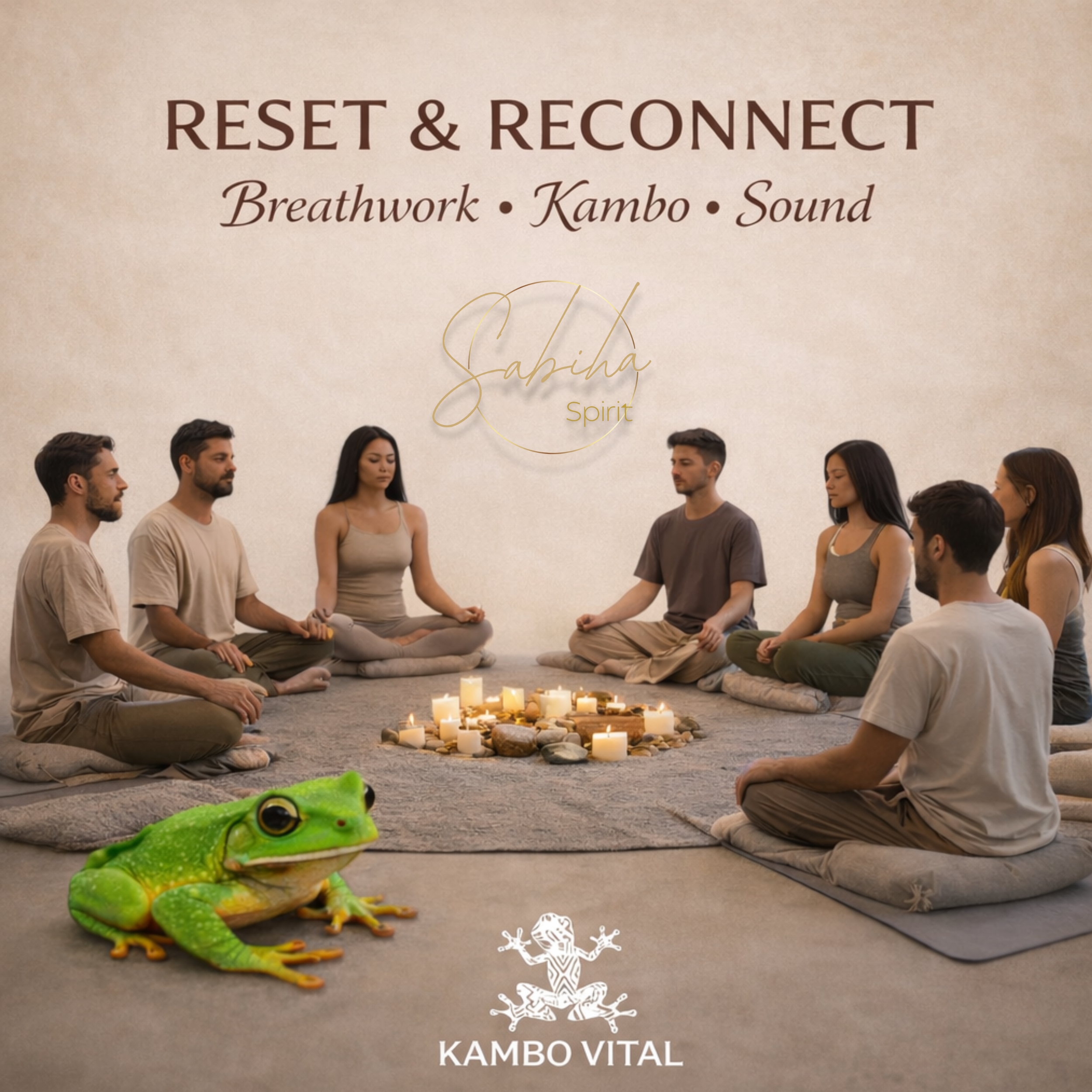
An Invitation to experience Kambo
Reading can offer understanding but experience brings embodiment.
For those who feel a genuine call to explore Kambo, we invite you into a carefully held ceremonial space that honours tradition, prioritises safety and allows time for rest and integration.